Kling 3.0 and Kling 3.0 Omni – What Can We Expect?
Quick Summary: Kling AI is preparing to enter its “3.0 era” with the launch of a brand-new unified video model. This model is not yet publicly released and is only available for preview to a select group of users. Kling 3.0 Series – Kling Video 3.0, Kling Image 3.0, Kling 3.0 Omni is coming soon to Dzine AI.
Based on the previous generation, the Kling 3.0 series models have improved audio-visual sync and subject consistency, added an intelligent multi-shot storyboard, extended 15-second clips generation, and enhanced the narrative ability of AI images.
Kling 3.0 Is Coming: What We Know So Far
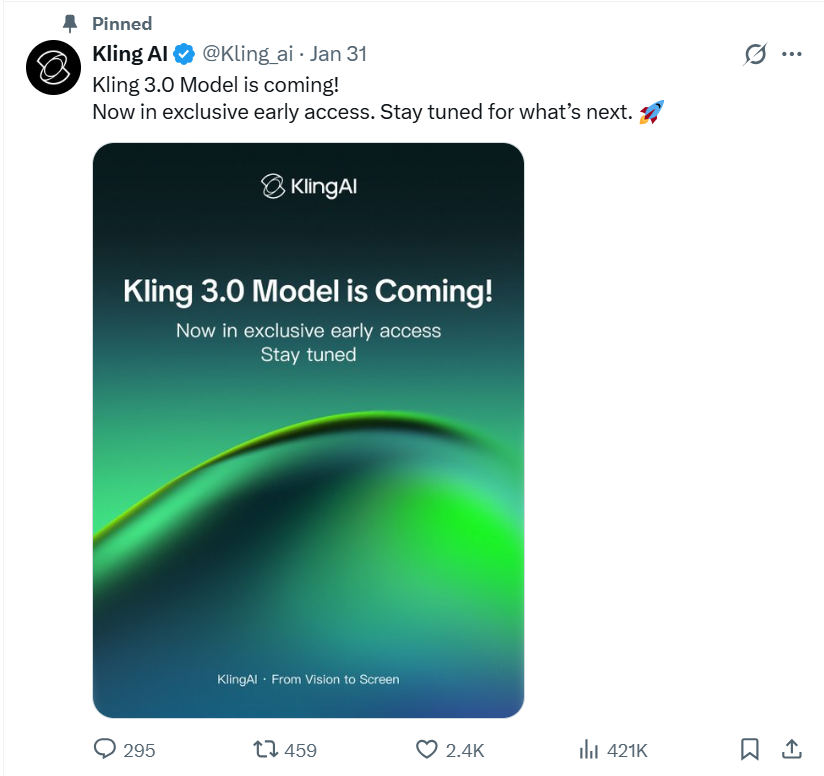
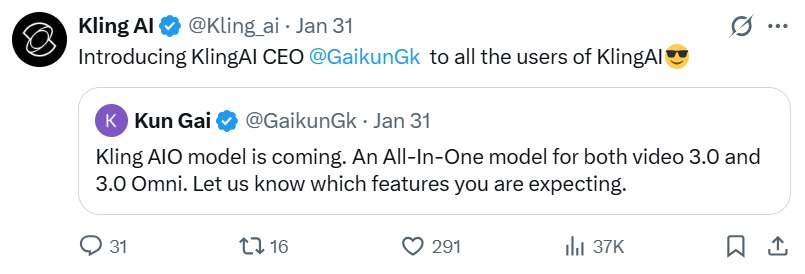
On January 31st, 2026, Kling AI dropped two exciting posts on social media that got everyone talking. Kling 3.0 and Kling 3.0 Omni are on their way. Kling 3.0 series is rumored to be released on February 10th.
Tweet 1: Kling 3.0 Model is coming
Tweet 1: Kling AIO model is coming
In this post, we’ll break down what we expect from Kling 3.0, explore what Kling 3.0 Omni might bring, and highlight the features that could change the game for video creation. Whether you’re a professional creator or just love making videos, here’s what you can look forward to.
What to Expect from Kling 3.0/Kling 3.0 Omni
Expect from Kling Video 3.0
Expectation 1. 15-Second Ultra-Long Generation
Kling 3.0 video generator can generate up to 15 seconds of video at a time, and the length can be adjusted freely (e.g., 3 seconds, 5 seconds, or 15 seconds). First, it allows for more complete storytelling, transforming the generation of short clips into a 15-second window that can contain richer actions, scenes, and plots. Second, it eliminates the hassle of splicing, enabling the generation of longer, more coherent shots or segments at once, without the need to piece together multiple short videos as in the past.
Expectation 2. Smart Multi-shot Storyboard
Kling 3.0’s intelligent multi-shot function is like an AI director; it automatically divides the video into different shots based on your text descriptions. It can directly generate finished videos that include professional techniques such as shot transitions (e.g., reverse shots of dialogue) and voice-over, eliminating the need for manual splicing or post-production processing. It allows you to easily achieve video effects that previously required professional editing and storyboarding skills.
Expectation 3. Audio-Visual Sync
Kling 3.0 allows characters in videos to speak accurately and supports multiple languages and dialects. Even if there are multiple people in the scene, you can specify which one to speak to. Characters can speak Mandarin, English, dialects, or even mix multiple languages in a single sentence (such as a mix of Chinese and English). The AI will automatically adjust the lip movements according to the language, making the dialogue look natural and fluent, without any sense of incongruity.
Expectation 4. Enhanced Subject Consistency
This feature ensures that the main character or object you specify remains stable in the video generated from the image. No matter how the camera moves (push in, zoom out, pan), the main character’s appearance and features will remain consistent, and it will not unexpectedly transform into another person or thing midway through the video.
Expect from Kling Image 3.0
Expectation 1. Visual Thought Chain
This is like an AI visualizing the composition, camera angle, and perspective in its “brain” before it actually draws. This ensures that the generated image is more professionally composed and resembles a cinematic shot, rather than just an ordinary photograph.
Expectation 2. Series Generation
You can generate a series of images with a consistent style and characters all at once. For example, you can generate all the storyboards for a story, with characters and art style remaining consistent, making it ideal for creating storyboards or serialized comics.
Expectation 3. Native 4K Output
The generated images are directly in ultra-high definition 4K resolution with extremely high clarity, requiring no additional enlargement. They can be used directly to print movie posters or create high-quality commercial advertising materials, maintaining perfect detail.
Expect from Kling 3.0 Omni
Expectation 1. Stronger Consistency and More Flexible
- Greater consistency: The characters and objects in the generated videos have a higher similarity to the reference images and are less likely to deviate from the original.
- More responsive: The AI can understand your written descriptions more accurately, and the visuals will better match your imagination.
- Fewer errors: The generated results are more mature and usable, with significantly reduced issues such as fragmented or distorted images.
Expectation 2. Characters Become More Realistic and Complete
- Add voiceover to video characters: You shoot a short video (like a friend talking), and AI can not only mimic their appearance to generate a new video, but also their voice, making the new video feature them speak in their own voice, with lip movements matching perfectly.
- Add voiceover to images: You can also upload several different photos of the same person and record their voice. AI can then use these photos to generate a moving “person” who speaks using the voice you provide, turning static photos into short videos with sound and expressions.
How to Use Kling 3.0 on Dzine AI?
Once Kling 3.0 is released, you can try it on Dizne AI. Here is a full guide for you.
Step 1: Go to Dzine AI and log into your account.

Step 2: Go to the AI Video part. Here you can upload the start and end frames images or refrenced images.
Step 3: Enter the prompt to desciribe the video that you want to generate.
Step 4: Choose Kling 3.0 as the video model. Here, you can also choose Hailuo 2.3, Kling O1, Seedance 1.5 Pro, and so on.
Step 5: Click Generate to start the process.
Final Words
Kling 3.0 is expected to be released in early February 2026. We will be closely monitoring official announcements – once Kling 3.0 is released, Dzine AI will bring it to our platform as soon as possible.